 0
0
 0
0
Punishment in Kindergarten by Kamala Das
About Author

Kamala Surayya, also known as Suraiyya or Madhavikutty, was a noteworthy Indian English poet and litterateur and a leading Malayalam novelist from Kerala, India. Her short tales and autobiography are her most popular works in Kerala, but her English output, published under Kamala Das, is known for its fiery poetry and graphic autobiography. She gained a lot of appreciation due to her honest presentation on female sexuality, free of any sense of shame, which gave her work a power that distinguished her as a generation’s iconoclast. She died on May 31, 2009, at the age of 75, in a Pune hospital.
Summary
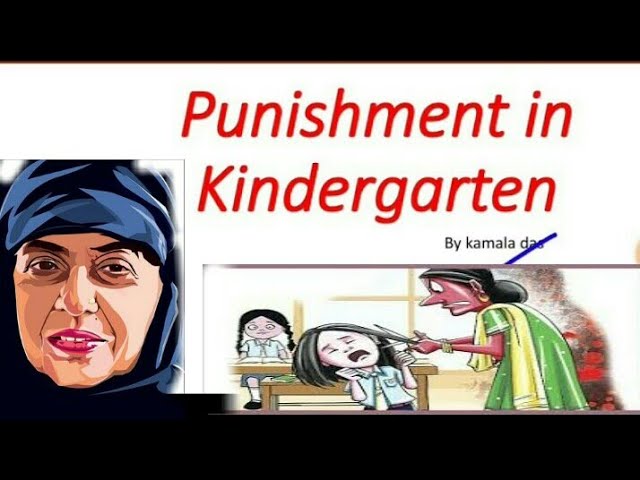
Punishment in Kindergarten” is a little autobiographical poem by the famous Indo-Anglian poet Kamala Das. She recalls one of her childhood experiences. When she was in the kindergarten, one day the children were taken for a picnic. All the children except her were playing and making merry. But she alone kept away from the company of the children. Their teacher, a blue-frocked woman, scolded her saying. “Why don’t you join the others, what A peculiar child you are!” This heard, all the other children who were sipping sugar cane turned and laughed. The child felt it very much. She became sad at the words of the teacher. But the laughter by the children made her sadder. She thought that they should have consoled her rather than laughing and insulting her. Filled with sorrow and shame she did her face in a hedge and wept. This was indeed a painful experience to a little child in the nursery school. Now after many years she has grown into an adult. She has only a faint memory of the blue-frocked woman and the laughing faces of the children. Now she has learned to have an ‘adult peace’ and happiness in her present state as a grown-up person. Now there is no need for her to be perturbed about that bitter kindergarten experience. With her long experience in life she has learned that life is a mixture of joy and sorrow. She remembers how she has experienced both the joy and sorrow of life. The long passage of time has taught her many things. She is no more a lonely individual as she used to feel when she was a child. The poet concludes that there is no need for her to remember that picnic day, when she hid her face in the hedge, watching the steel-white sun that was standing lonely in the sky. The poem is written in three stanzas, each having different number of lines – the first with seven lines, the second with six and the third with nine. The poem does not follow any regular rhyme scheme. The subject matter of the poem has two parts, the first of which being the description of the painful experience of the kindergarten days and the second, the adult’s attitude to the incident at present when she is no more a child. The poet seems to be nostalgic about her childhood days. There are certain expressions in the poem that are worth remembering. The poet says that the child buried its face in the hedge and “smelt the flowers and the pain”. “Smelt the flowers can be taken as an ordinary expression, but “smelt the pain” is something very evocative and expressive. In the first stanza of the poem, the poet describes the pain caused to the child, “throwing words like pots and pans”. This again is beautiful. The phrase used by the poet to describe the child’s teacher, namely, “blue-frocked woman” can be justified from the child’s point of view. But to the poet who is an adult the use of the phrase looks a little too awkward. On the whole, the poem can be taken as the poet’s interest in remembering her childhood days.
सरांश नेपालीमा
किन्डरगार्टनमा सजाय” प्रसिद्ध इन्डोएङ्गलिकन कवि कमला दासको अलिकति आत्मकथात्मक कविता हो। तिनी आफ्नो बाल्यकालको एउटा अनुभव सम्झन्छिन् । तिनी बालबच्चामा छँदा एक दिन तीबच्चाहरूलाई पिकनिकको लागि लगियो। तिनीबाहेक अरू सबै केटाकेटीहरू खेल्दै र रमाइरहेका थिए। तर तिनी एक्लैले छोराछोरीसितसंगत गर्न छोडेकी थिइन्। तिनीहरूको शिक्षिका, नीलो-फ्रेक भएकीआइमाईले तिनलाई गाली गरिन्। “अरुलाई किन साथ नदेऊ, तिमी कस्तो अनौठो बच्चा हौ !” यो सुनेर चिनीको उखु चुसिरहेका अरू सबै केटाकेटीहरू फर्केर हाँसे। बच्चाले असाध्यै महसुस गऱ्यो ।शिक्षिकाको कुरा सुनेर उनी दुःखी भइन्। तर छोराछोरीको हाँसोले गर्दा तिनी दुःखी भइन्। तिनीहरूले उनलाई हाँसेर अपमान गर्नुको सट्टा सान्त्वना दिनुपर्ने थियो भन्ठानेकी थिइन्। तिनले आफ्नो अनुहारपर्खालमा राखिन् र रोइन्। यो पक्कै पनि नर्सरी स्कूलमा एउटा सानो बच्चाको लागि पीडादायी अनुभव थियो। धेरै वर्षपछि तिनी वयस्क भइसकेकी छिन् । तिनले नीलो रंगकी आइमाई र बच्चाहरूको हाँसउठ्दा अनुहारमात्र सम्झिन्छिन् । अहिले उनले वयस्क भएपछि अहिलेको अवस्थामा ‘प्रौढ शान्ति’ र आनन्द प्राप्त गर्न सिकेकी छिन्। अब बालबच्चाको त्यस्तो तीतो अनुभवले गर्दा तिनी चिन्तित हुनु आवश्यक छैन । जीवनको लामो अनुभवले गर्दा तिनले जीवन आनन्द र दुःखको मिश्रण हो भन्ने कुरा सिकेकी छिन्। तिनले जीवनको आनन्द र दुःख दुवै कसरी अनुभव गरेकी छिन् , त्यो सम्झन्छिन् । लामोसमय बितेपछि तिनले थुप्रै कुरा सिकाइन् । तिनी सानै छँदा महसुस गर्ने एक्लो व्यक् ति होइनन् । आकाशमा एकाकीपनले उभिएको स्टिल सेतो सूर्य लाई हेर्दै, त्यो पिकनिक को त्यो दिन सम्झिनु पर्दैन भन्ने निष्कर्षमा कवि आउछन। यो कविता तीन चरणहरूमा लेखिएको छ। प्रत्येकमा फरकफरक हरफ छन्– पहिलोमा सात हरफहरू छन्, दोस्रोमा छ र तेस्रोमा नौ छन्। कविताले कुनै पनि नियमित कविता योजनापालन गर्दैन। कविताको विषयवस्तुमा दुई पाटा छन् । जसमध्ये पहिलो शिशु दिवसको पीडादायी अनुभव को वर्णन र दोस्रो, उनी अब बच्चा नभएपछि अहिलेको घटनाप्रति वयस्कको रवैया रहेको छ । कविआफ्नो बाल्यकालबारे चिन्तित देखिन्छन्। कवितामा केही यस्ता अभिव्यक् तिहरू छन् जो सम्झन लायक छन् । कविभन्छन्, बच्चाले आफ्नो अनुहार पर्खालमा गाडेर “फूल र वेदना पगाल्नेछ।” “फूलहरूलाई साधारण अभिव्यक्तिको रूपमा लिन सकिन्छ तर “पीडा लाई पगाल्नुहोस्” यो एकदमै उत्प्रेरणादायी र अभिव्यक्त कुरा हो। कविताको पहिलो स्टान्जामा कविले बालकलाई भएको पीडाको वर्णन गर्दै “भाँडा र पानजस्ता शब्दहरू फ्याँक्दै” वर्णन गरेका छन्। यो फेरि सुन्दर छ। कविले बच्चाको शिक्षकको वर्णन गर्न प्रयोग गर्ने वाक्यांश अर्थात् “नीलो-फ्रेक गरिएको स्त्री” बालकको दृष्टिकोणबाट जायज हुनसक्छ। तर वयस्क कविको लागि यो वाक्यांश प्रयोग गर्न अलि अप्ठ्यारो लाग्छ। समग्रमा कवितालाई उनको बाल्यकालको सम्झनामा कविको रुचिको रुपमा लिन सकिन्छ ।
Answer the following questions.
a) What kind of ‘pain’ does the poet talk in the first stanza?
= In the first stanza, the poet talks about her mental pain or punishment caused due to the unfair and insulting behaviour of her Kindergarten teacher who was always clad in a blue frock.
b) Why does the poet say, ‘today the world is little more my own’?
= The poet says that she has been living freely on her own nowadays because she is mature enough and has been enjoying adult peace in her mind.
c) In what way ‘children are funny things’?
= Children are funny because they entertain by laughing at their friends, but do not take it very seriously.
d) Which ‘world’ the poet is talking about in the last stanza ?
= The poet compares childhood days with her present situation, and she finds latter better than the former. Thus, she is talking about her past and present here.
e) The poet is talking about her school – day experience, what kind of child she was do you think? Portray her.
= The poet is taking about her school-day experience. She was a peculiar girl when she was a school student. At that time she must have some mental disturbances due to the behaviour of her teacher and her classmates as well. By analyzing her behaviour, she had during her school-age, she must have been an unfreindly or deserved child.
f. Show the relevance of the title to the theme of the poem.
= The title ‘Punishment in Kindergarten’ is really relevant to the life of the poet because she was mentally punished by the behaviour of the teacher and her classmates of her school.



Average Rating