 0
0
 0
0
About Author

Rudyard Kipling, in full Joseph Rudyard Kipling, (born December 30, 1865, Bombay [now Mumbai], India—died January 18, 1936, London, England), English short-story writer, poet, and novelist chiefly remembered for his celebration of British imperialism, his tales and poems of British soldiers in India, and his tales for children. He received the Nobel Prize for Literature in 1907.
Summary
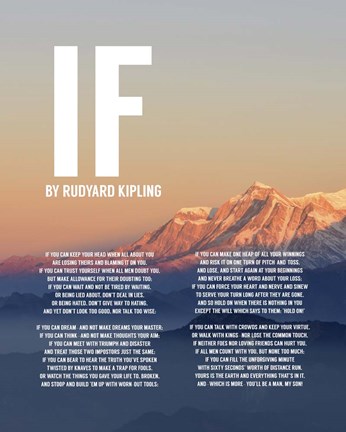
The Poem If….was written by Rudyard Kipling. This poem presents some good qualities needed in our life. These good qualities make us successful and happy in life. They are guiding stars of our successful life.
First Stanza
The first stanza of the poem presents us that we can keep our head high keeping ourselves calm are when other people blaming us for their loss because it is the result of their stupidity or something else not desirable. When other people doubt us, we must ourselves but we have to have some considerations about them. Similarly, this poem tells us not to be tired by waiting when we can wait. And we can be told a lie but we should not tell a lie to others. Or we can be hated but we should not cheat others. Therefore, we should show ourselves very smart and wise in front of others; or one should not have the sense self-praise. Thus, this stanza tells us something about our head or prestige, others’ doubt, our waiting, lies and truths, love and hate and self-praise.
Second Stanza
The second stanza tells us something about our aim in life, thoughts, triumph and disasters. It is expressed that we can dream about our life but we should not be slaves of these dreams in life because we can think of our aim in life but such thoughts should not get our life to be imprisoned because there aims and thoughts are the vehicles used to meet the destinations of life. Similarly, gain and loss, and triumph and loss are two sides of our life. Therefore, these aspects are to be judged relatively, not absolutely dishonest fools. Likewise, we need to watch the things to which we have given our life when they are broken we have in our life.
Third Stanza
The third stanza shows what we should do about the truth, tricks of fools and reality watched in life. This stanza tells that we should believe the truth we have seen or heard even if it is twisted broken by and stoop due to worn-out tools. Therefore, we should stick ourselves to the truth and reality, and the things
Fourth Stanza
The fourth stanza talks winning, loss, self-confidence and will-power. This stanza tells us that our Winnings can be lost in the process though which our life moves ahead. If we have lost what we have already gained, we need to bring again to get success in life, and we should not worry about the loss we have. It is because ‘gain and loss’ arc natural outcomes in the process through which our life moves ahead. Our self-confidence to regain something is the most important tool in life. If we have saved our will-power, we can achieve success in life: therefore, we must preserve it.
Fifth Stanza
The fifth stanza depicts human virtues, our relation to others, our friends and enemies and importance of time in life. This stanza tells us that we should keep our virtues while talking with crowds, or walking with the great people because we should not lose our common touch. If we can do so, even our enemies cannot hurt us because we also have our loving friends. We have everything in life; therefore, we can do something important in our life which is not very long.
In this way , the poet has presented some lessons to be followed in our life to make our lives easy and successful.
यो कविता Rudyard Kipling ले लेखेका हुन । यस कवितामा मानव जीवनको लागि आवश्यक पर्ने केही राम्रा गुणहरूलाई प्रस्तुत गरिएको छ । उक्त गुणहरूले हाम्रो जीवनलाई सफल र खुसी बनाउन सहयोग गर्छन् किनकी उक्त गुणहरू हाम्रो जीवनका पथप्रदर्शक हुन् ।
पहिलो श्लोक
प्रस्तुत कविताको पहिलो श्लोक (stanza) मा हामी मानवले हाम्रो शिर उच्च राख्ने काम गर्नुपर्छ भनी उल्लेख गरिएको छ। अरूको सफलतामा हामीलाई दोष लगाउने अवस्था आउँदा पनि हामीले आफ्नो विश्वासलाई दृढ बनाउनु पर्छ । अरूले आफूलाई विश्वास नगरे पनि हामीले आफूलाई पूर्णरूपमा विश्वास गर्नुपर्छ । त्यस्ता व्यक्तिहरू जसले हामीलाई दोष दिन्छन् त्यस्ता व्यक्तिलाई हामीले सही रूपमा मूल्याङ्कन गर्नुपर्छ । त्यसै गरी कुनै पनि कुरा प्राप्त गर्न हामीले प्रतीक्षा गर्नुपर्छ । साथै अरूले हामीलाई असत्य कुरा भने पनि हामीले सधैं सत्य बोल्नुपर्छ । यसको अतिरिक्त हामीलाई कसैले हेला गरे पनि हामीले उनीहरूलाई हेला गर्नु हुँदैन । हामीले अरूको अगाडि आफू धेरै जान्ने जस्तो भएर प्रस्तुत हुन वा आत्माप्रशंसा गर्नु हुँदैन । यसरी यो श्लोकले आफ्नो इज्जत, अरूको शंका, आफ्नो प्रतीक्षा, सत्य असत्य र घृणा र मायाको बारेमा हामीलाई केही सुझाबहरू दिएको छ।
दोस्रो श्लोक
प्रस्तुत कविताको दोस्रो (stanza) ले सत्य मूर्खता, जीवनको लक्ष्य, विचारहरू र विजयरपराजयको बारेमा हामीलाई केही सुझावहरू दिएको छ । हामीले हाम्रो जीवनको लक्ष्यलाई प्राप्त गर्न जीवनलाई नै बन्धनमा राख्नु हुँदैन । हाम्रा विचारहरू लक्ष्यमा पुग्ने साधनहरू भएकोले उक्त साधनहरूको प्रयोग गरी जीवनलाई सफल बनाउनु पर्छ । त्यसै गरी प्राप्ति र विनाश तथा विजय र पराजयलाई हाम्रा जीबनका दुई पक्षहरूको रूपमा ग्रहण गर्नुपर्छ । अर्थात् त्यस्ता पक्षहरूलाई सो पक्षमा मूल्याङ्कन गर्नुपर्छ ।
तेस्रो श्लोक
प्रस्तुत कविताको तेस्रो (stanza) ले सत्य र यसलाई मूर्खहरूले हेर्ने दृष्टिकोणका बारेमा केही भनिएको छ । हामीले देखेको र भोगेका सत्यलाई मूर्खहरू र बेइमानहरूले बङ्ग्याए पनि यसबाट आफू बिचलित हुनु हुँदैन । साथै हामीले आफ्नो जीवन दिइएका कुरालाई अरूले फुटाउने प्रयत्न गरे पनि आफूले आफ्नो बिचाररूलाई दृढ राख्नुपर्छ । तर हाम्रो विश्वास वास्तविकतामा आधारित हुनुपर्छ।
चौथो श्लोक
प्रस्तुत कविताको चौथो stanza ले प्राप्ति र विनाश, आत्मविश्वास र इच्छाशक्तिको बारेमा केही सुझावहरू दिइएको छ । हाम्रो जीवनमा आइपर्ने प्राप्ति र विनाश जीवनका स्वाभाविक प्रक्रियाहरू भएकोले विनाशमा पनि चिन्तित हुनु हुँदैन । बरु विनाश पछि अरू बढी प्राप्त गर्न फेरि नयाँ कामको सुरुवात गरी जीवनलाई अगाडि बढाउनु पर्छ । हाम्रो जीवनको सफलतामा हाम्रो आत्मविश्वास र इच्छाशक्तिले निर्णायक भूमिका खेलेको हुन्छ । त्यसैले जीवनमा सफलता प्राप्त गर्नु हामीले हाम्रो आत्मविश्वास र इच्छाशक्तिलाई सधैं प्रवल बनाइराख्नु पर्छ ।
पाँचौं श्लोक
प्रस्तुत कविताको पाँचौं stanza ले मानव जीवनका सत्य गुणहरू, अरू व्यक्तिहरूसँगको सम्बन्ध, हाम्रा मित्र तथा शत्रुहरू, समयको महत्त्वको बारेमा हामीलाई केही सुझावहरू दिइएको छ । हामीले हाम्रा सत्गुणहरूलाई व्यवहारमा प्रस्तुत गर्दै हाम्रो जीवनलाई समाजमा स्थापित गर्नुपर्छ । हामीले हाम्रा शत्रु र मित्रहरूलाई चिन्न सक्यौं भने हाम्रो जीवन सफल बनाउन सक्छौं । त्यस्ता शत्रुहरूलाई पराजय गर्न हाम्रा सत्गुणहरू र मित्रहरूको माया नै सबैभन्दा शक्तिशाली हतियार हुने भएकोले हामीले जीवनको लक्ष्य प्राप्त गर्न सक्छौं ।
यसरी कविले हामीले हाम्रो जीवनलाई सफल र सुखमय बनाउनको लागि विभिन्न प्रकारका राम्रा राम्रा गुणहरु अपनाउनुपर्छ भनेर सल्लाह दिनु भएको छ ।
Answer the following questions.
a) Make a list of thinks the poet suggests to do. Then, divide them into two categories:
= As the poet suggests, ‘I can’ or ‘I can’t do’ can be given as below:
The Things I Can Do The things I Can’t Do.
a. keep my head a. deal in lies.
b. trust myself b. look too good
c. wait for something c. tack too wise
d. dream for future d. hate others
e. think something e. use worn-out tools
f. bear the truth f. breathe word almost loss
g. meet with triumph and disaster g. loss common touch
b) In the second stanza, the poet calls Triumph and Disaster as ‘two impostors’. Why? Interpret the whole stanza.
= The second stanza tells us something about our aim in life, thoughts, triumph and disasters. It is expressed that we can dream about our life but we should not be slaves of these dreams in life because we can think of our aim in life but such thoughts should not get our life to be imprisoned because there aims and thoughts are the vehicles used to meet the destinations of life. Similarly, gain and loss, and तriumph and loss are two sides of our life. Therefore, these aspects are to be judged relatively, not absolutely.
c) Who does ‘my son’ in the last line of the poem refer to, and in the same line why the word ‘Man’ has capital M?
= The phrase ‘my son’ in the last line of the poem refers to the young person who needs to have all positive human qualities. And in the same line, the word ‘Man’ has the first letter capitalized to refer to a complete human being who possesses all the positive human attributes.
d) How do you feel when you read the poem? Do you like the tone of the poem? Give reasons for your agreement or disagreement.
= When I read the poem, I feel that it is interesting and motivating because it presents us some suggestions required in life. It teaches us what we should ‘do’ and what ‘not’ to be good human beings in our life.



Average Rating