 1
1
 0
0
About Author

Siegfried Loraine Sassoon, CBE MC (September 8, 1886 – September 1, 1967) was an English poet and author. He became known as a writer of satirical anti-war verse during World War I. He helped to discover another war poet, Wilfried Owen, and later won acclaim for his prose work. “His later poetry was increasingly devotional.” Sassoon was a great admirer of the Welsh poet, Henry Vaughan. On a visit to Wales in 1923, he paid a pilgrimage to Vaughan’s grave at Llansanffraid, Powys, and there wrote one of his best-known peacetime poems, At the Grave of Henry Vaughan. The deaths of three of his closest friends, Edmund Gosse, Thomas Hardy, and Frankie Schuster (the publisher), within a short space of time, came as another serious setback to his personal happiness.
Summary
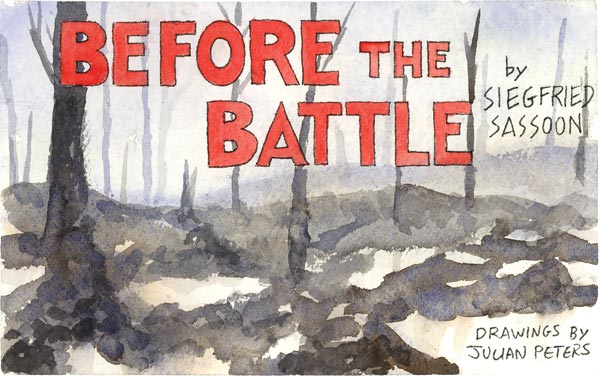
Before the Battle is a poem written by the English writer Siegfried Sassoon in 1916. The poem is named Before the Battle, because it reflects the thoughts of the speaker before a battle, we must remember that it is written in 1916, when Sassoon was fighting in France in the First World War.
The poem has two stanzas. The first stanza has six verses and the second stanza has seven verses. The rhyme scheme is almost the same in each stanza, with the difference that the second stanza has one more verse than the first one: the first stanza has a AABCCB rhyme scheme, and the second stanza has a DEFFEE rhyme scheme.
In the first stanza the speaker is describing the landscape where he is. It is a beautiful place, for the description of the author we may think that he is in the countryside, next to a river or a small lake, because of the trees and the water named in the poem . The place that Sassoon is describing is a peaceful place at the beginning of the poem, with the whispering of the trees, the water shining and the birds singing but in the end of the first stanza we can see that this place is even more peaceful, because it is getting dark and he can be invisible. Because of this, he feels safe.
In the second stanza, the author is expressing his feelings. the author here tells the reader that he is not afraid and he has no need to pray for his safety because he feels safe now and he doesn’t like the fighting during the day. At night he has not to fight, so he wants to go to the dark, at night.
* *******************************************************************************************
This poem is a reflection of Sassoon about the war. His position was difficult, because he was against war, but he had to fight bravely in the war against Germans in France. In spite of being a coward deserting, he made brave actions, such as the capture of a German trench in the Hinderburg Line, because he knew the horrors of the war, but maybe he thought that it was necessary to protect his country. Sassoon wrote this poem to show the readers how the light can made him feel insecure, since it is during the day when both
armies are fighting, when the sun can be seen reflected in the water. And the battlefield could be in anywhere, even in a beautiful place, which is ironical, because it is hard to think in a beautiful and terrifying place at the same time, just as Sassoon is describing. The place that he is describing is beautiful, but not to him, because is there where Sassoon fights every day, until the conquest of the land. He prefers not to see that place during the day, because he will see the beauty of that place, and the horrors, too. He prefers the night, which is dark, and at night, he cannot see the horrors of the day and where he has not to pray for his life. The darkness where the author wants to be could be death. If he is dead, he would not see the horrors that he has to see every day in the battlefield, which used to be beautiful in
the past, but now has become in a trench, plenty of bombs and dead people. If the author follows the river of stars and shadows, he could be in peace. For him, death and night is the same, no fighting.
सरांश नेपालीमा
बिफोर द ब्याटल १९१६ मा अङ्ग्रेजी लेखक सिगफ्राइड सासुनले लेखेका कविता हो। यो कविताको शिर्षक बिफोर द बैटल राखिएको हो किनभने यसले युद्ध अघि वक्ताको विचारलाई प्रतिबिम्बित गर्छ, हामीले यो सम्झनु पर्छ कि यो सन् १९१६ मा लेखिएको थियो, जब सासुन पहिलो विश्व युद्ध मा फ्रान्समा लडिरहेको थियो। ।
कवितामा दुईवटा श्लोक छन् । पहिलो श्लोकमा छ लाइन र दोस्रो श्लोकमा सात लाइन छन् । प्रत्येक श्लोकमा लय लगभग उस्तै छ, दोस्रो श्लोकमा पहिलो श्लोकको तुलनामा एक बढी पद छ: पहिलो श्लोकमा AABCCB कविता योजना छ, र दोस्रो श्लोकमा DEFFEE कविता योजना छ।
पहिलो श्लोकमा वक्ताले आफू भएको परिदृश्यको वर्णन गर्दै हुनुहुन्छ। यो एक सुन्दर ठाउँ हो, लेखकको वर्णनको लागि हामी सोच्न सक्छौं कि उहाँ ग्रामीण इलाकामा हुनुहुन्छ, खोला वा सानो तालको छेउमा, रूखहरू र कवितामा नाम दिइएको पानीको कारण। ससुनले वर्णन गरेको ठाउँ कविताको सुरुमा एउटा शान्त ठाउँ हो, रुखको कानाफुस, पानी चम्किरहेको र चराचुरुङ्गीले गाएको तर पहिलो श्लोकको अन्त्यमा यो ठाउँ झनै शान्त छ भन्ने देख्न सकिन्छ । किनभने यो अँध्यारो हुँदैछ र ऊ अदृश्य हुन सक्छ। जसका कारण उनी सुरक्षित महसुस गर्छन् ।
दोस्रो श्लोकमा लेखकले आफ्नो भावना व्यक्त गरेका छन् । यहाँ लेखकले पाठकलाई बताउँछन् कि उनी डराउँदैनन् र आफ्नो सुरक्षाको लागि प्रार्थना गर्न आवश्यक छैन किनभने उनी अहिले सुरक्षित महसुस गर्दैछन् र उनलाई दिनको समयमा झगडा मन पर्दैन। रातमा उसले लड्नु पर्दैन, त्यसैले ऊ रातमा अँध्यारोमा जान चाहन्छ।
यो कविता युद्धको बारेमा सासुनको प्रतिबिम्ब हो। उहाँको स्थिति कठिन थियो, किनभने उहाँ युद्धको विरुद्धमा हुनुहुन्थ्यो, तर उहाँले फ्रान्समा जर्मनहरू विरुद्धको युद्धमा साहसपूर्वक लड्नुभयो। डरपोक मरुभूमि भएको बावजुद, उनले हिन्डरबर्ग लाइनमा जर्मन खाडल कब्जा गर्ने बहादुरी कार्यहरू गरे, किनभने उसलाई युद्धको भयावहता थाहा थियो, तर सायद उसले सोचेको थियो कि यो आफ्नो देशको रक्षा गर्न आवश्यक छ। सासुनले यो कविता पाठकहरूलाई कसरी प्रकाशले आफूलाई असुरक्षित महसुस गराउन सक्छ भनेर देखाउनको लागि लेखेका थिए, जसरी कि यो दिनको समयमा हुन्छ, सेनाहरू लडिरहेका छन्, जुन पानीमा प्रतिबिम्बित देख्न सकिन्छ। र युद्धभूमि जहाँसुकै पनि हुन सक्छ, सुन्दर ठाउँमा पनि, जुन विडम्बनापूर्ण छ, किनकि सासुनले वर्णन गरेको जस्तो सुन्दर र डरलाग्दो ठाउँमा एकै समयमा सोच्न गाह्रो छ। उसले वर्णन गरेको ठाउँ सुन्दर छ, तर उसको लागि होइन, किनकि यो त्यही ठाउँ हो जहाँ ससून हरेक दिन लड्छ, यद्ध नजित्दासम्म। उसले दिनको समयमा त्यो ठाउँ नहेर्न रुचाउँछ, किनकि उसलाई त्यो ठाउँको सुन्दरता र डरलाग्दो दृश्यहरू पनि देखिन्छ। उसले रात मन पराउँछ, जुन अँध्यारो हुन्छ, र रातमा, उसले दिनको भयावहता देख्न सक्दैन र जहाँ उसले आफ्नो जीवनको लागि प्रार्थना गर्नुपर्दैन। लेखकले अन्धकारमा मृत्यु चाहन्छ। यदि ऊ मरे भने, उसले युद्धको मैदानमा हरेक दिन देख्नु पर्ने डरलाग्दो देख्ने थिएन, जुन पहिले सुन्दर थियो तर अहिले खाडलमा परिसकेको छ, धेरै बम र मरेका मानिसहरू छन। यदि लेखक नदी र छायाँलाई पछ्याउँछ भने, ऊ शान्तिमा हुन सक्छ। उसको लागि मृत्यु र रात उस्तै छ, जहाँ लडाइँ हुदैन ।
Answer these questions.
a. Describe the scene created by the poet in the first stanza. What kind of feeling does the scene evoke in you ?
= The poet has created the scene in the first stanza. He enjoys the music of whispering trees due to broad-winged breeze. The water in the streams gleams as the result of the rays of the sun. And birds seem to be singing beautifully. I feel that the scene must have been peaceful and beautiful.
b) How would you describe the last line of the first stanza? It is an appeal, a desperate cry, a call for help, a wish or any other thing? Give reason in support of your answer.
= In the last line of the first stanza, the speaker appeals the streams to lead him to the safe place through dark because he wants to avoid a battle.
c) In the second stanza, the poet say that he has no need to pray. Why does he say so?
= In the second stanza, the poet as the speaker expresses his feeling towards the battle. He does not like it. He feels he does not need to pray because he will not participate in the war. He wishes to live in the dark and peace.
d) Why does the poet ‘scorn the growl and rumble of the fight’? What fight is the talking about?
= The poet scorns the growl and rumble of the fight because he loves peace and nature. It is because fights/wars lead us to chaos and failure in life.
e) Would you call it a war poem? Give reasons in support of you answer.
= It is a war poem although the poet does not like it because it moves around the content of the war. In addition, it is the poem of nature because it gives priorities to the peace of nature. The poet feels wars destroy pleasures of people.



Average Rating